Affect is a disabled-led movement to amplify multiply marginalized people of color and advocate for disability justice. Since 2019, they have created disability media and community resources championing liberated, accessible futures. Currently, Affect has two programs: Disabled And Here and the Community Care Awards.
In this interview, Elea Chang, Creator and Board Director of Affect, discusses the movement's history, core programs, and vision for disability justice and community care.
Below is an edited transcript of the conversation.
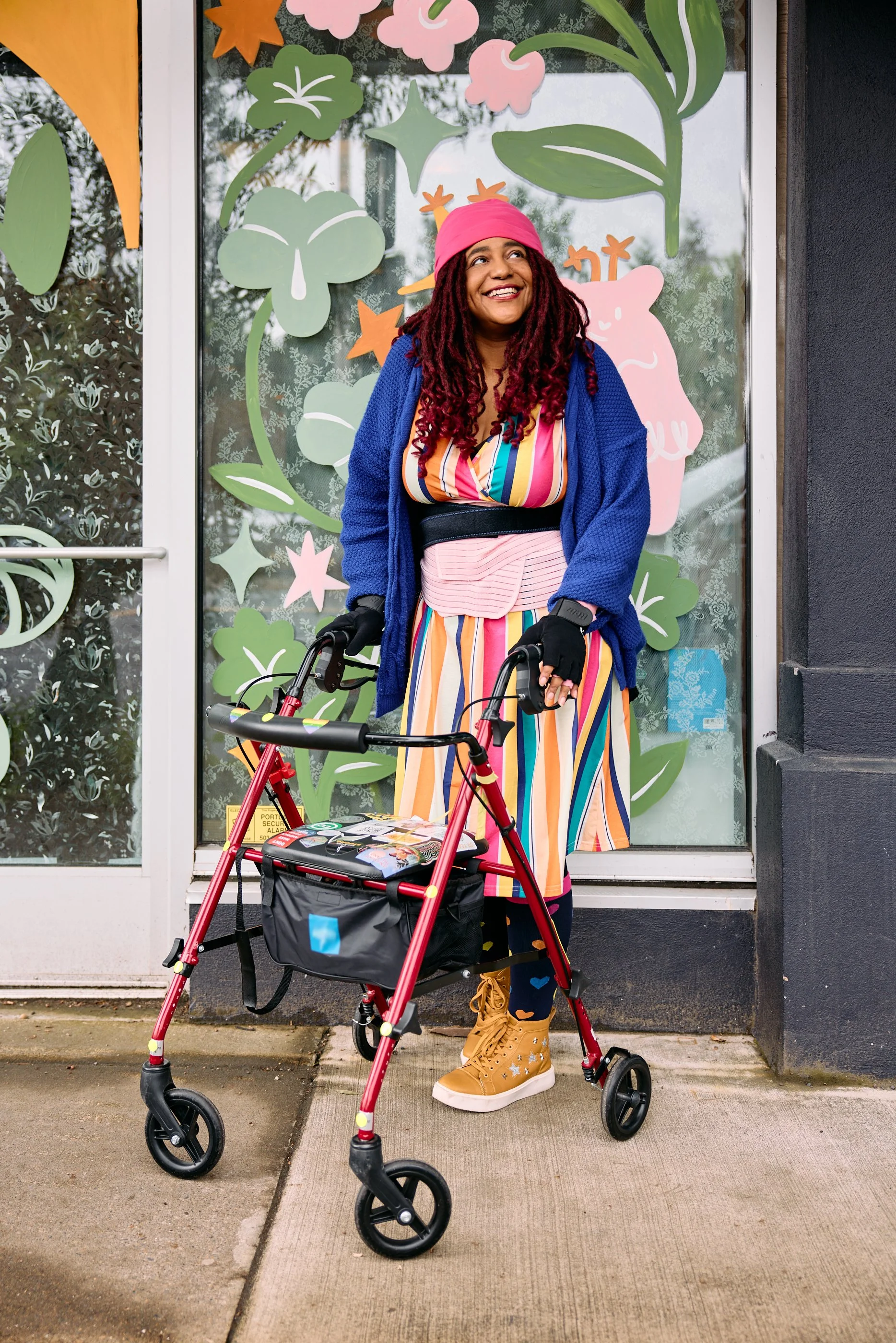
Photo from Affect The Village’s Disabled And Here project
Q: I imagine that so many individuals and organizations get introduced to you via your “Disabled And Here stock collection”
A: Yes! It's still our main program, primarily focused on people in the Pacific Northwest. During the lockdown, we added illustrations from disabled US artists as well.
Q: Has that had other positive impacts that you perhaps hadn’t imagined?
A: People can get tired of representation, in that it is only the first step of many. We’re not just about representation, but about reclaiming the narrative as disabled people of color. Some participants use Disabled And Here to manifest imagined futures and it can encourage other folks on their leadership path.
Q: When you look at the images out in the world now, what does that mean to you?
A: I get most excited when a fellow CBO (community-based organization) uses our images or when I see disabled leaders of color using the collection. I see some disability rights groups using the photos—but it can make them appear more diverse than they are.
My intent was to portray disabled BIPOC in joy, power, and community so that whether subconsciously or consciously, people will be more excited and accepting of disabled BIPOC agency and leadership.
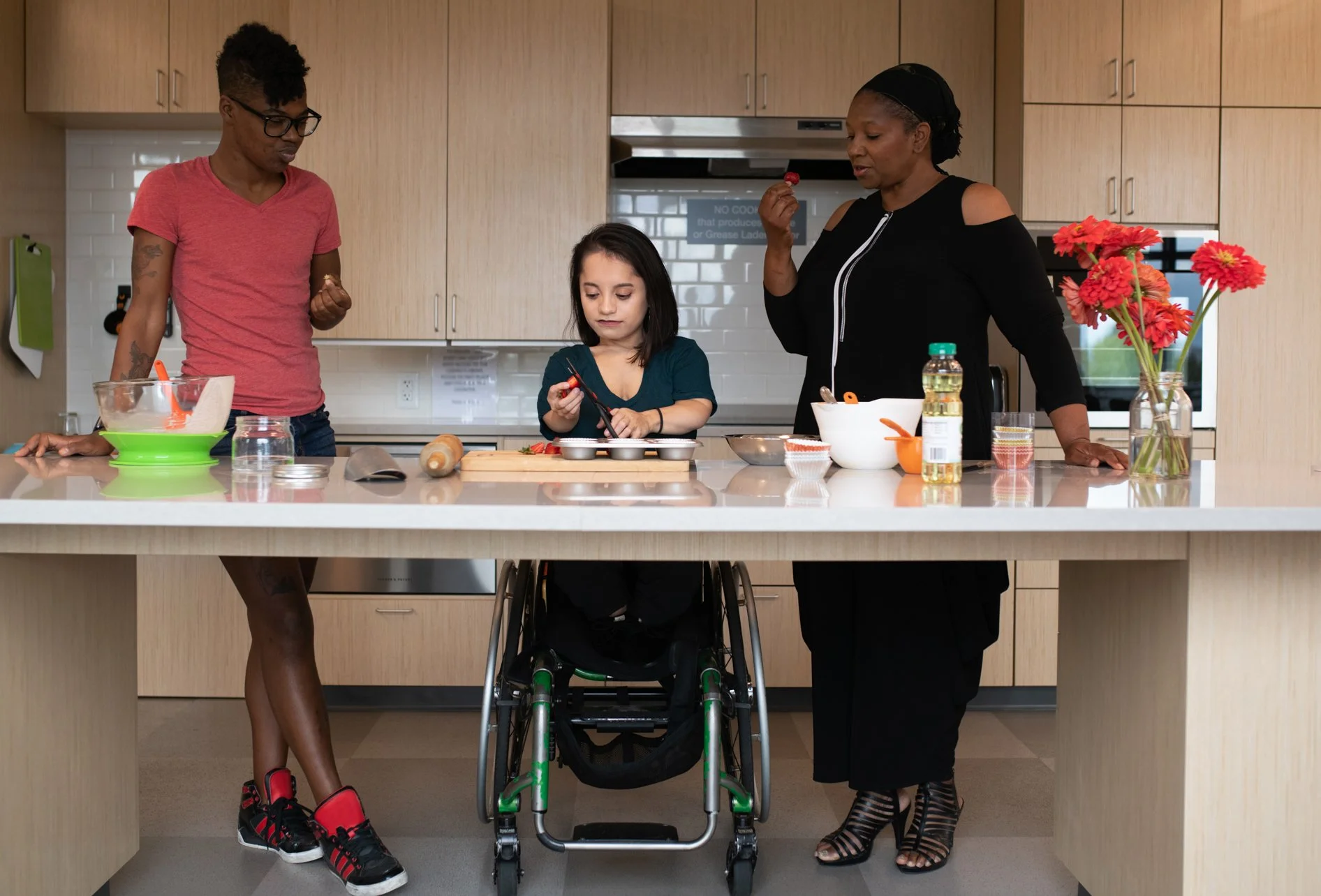
Photo Credit: Disabled And Here project
Q: I imagine y’all are now photo shoot pros - what are some best practices to ensure models feel supported? / You’ve put a lot of thought into making the photoshoots feel different from a typical production environment. What have you learned about what it takes for people to feel comfortable and in control of their own story?
A: We are very intentional about how we post and frame Disabled And Here images. We usually have an open call for participants and I meet with folks to review potential shots they want or don’t want, plus a light Q&A to learn about their hobbies and what they want highlighted photographically. What is the narrative that they want to craft? What would be meaningful for you to have captured and show your friends? Some folks do simply want a shot list, but participants always get a say!
Q: Has there been a moment during a shoot that has really stayed with you?
A: My favorite shoot so far has been the hiking shoot with G. They’re powerful and badass and have a great connection to nature. In order to shoot it, we had to basically do a hike. Because of COVID, we did smaller, 1:1 shoots; this was our first shoot after COVID and it was a really fun experience. We spent a lot of time trying to make sure it was a good experience for G and not rushed. People mostly see the end result of the finished photos, but we know that if you work hard and make sure people are cared for, it results in better visuals and the participants know we are invested in their experience.
In some of our most recent photo shoots, there might be fewer photos, because my focus is the participant more than the deliverable.
Q: Tell me about your COVID + Health Resource Library? CHRL (“Coral”).
A: CHRL is a program we launched this year.
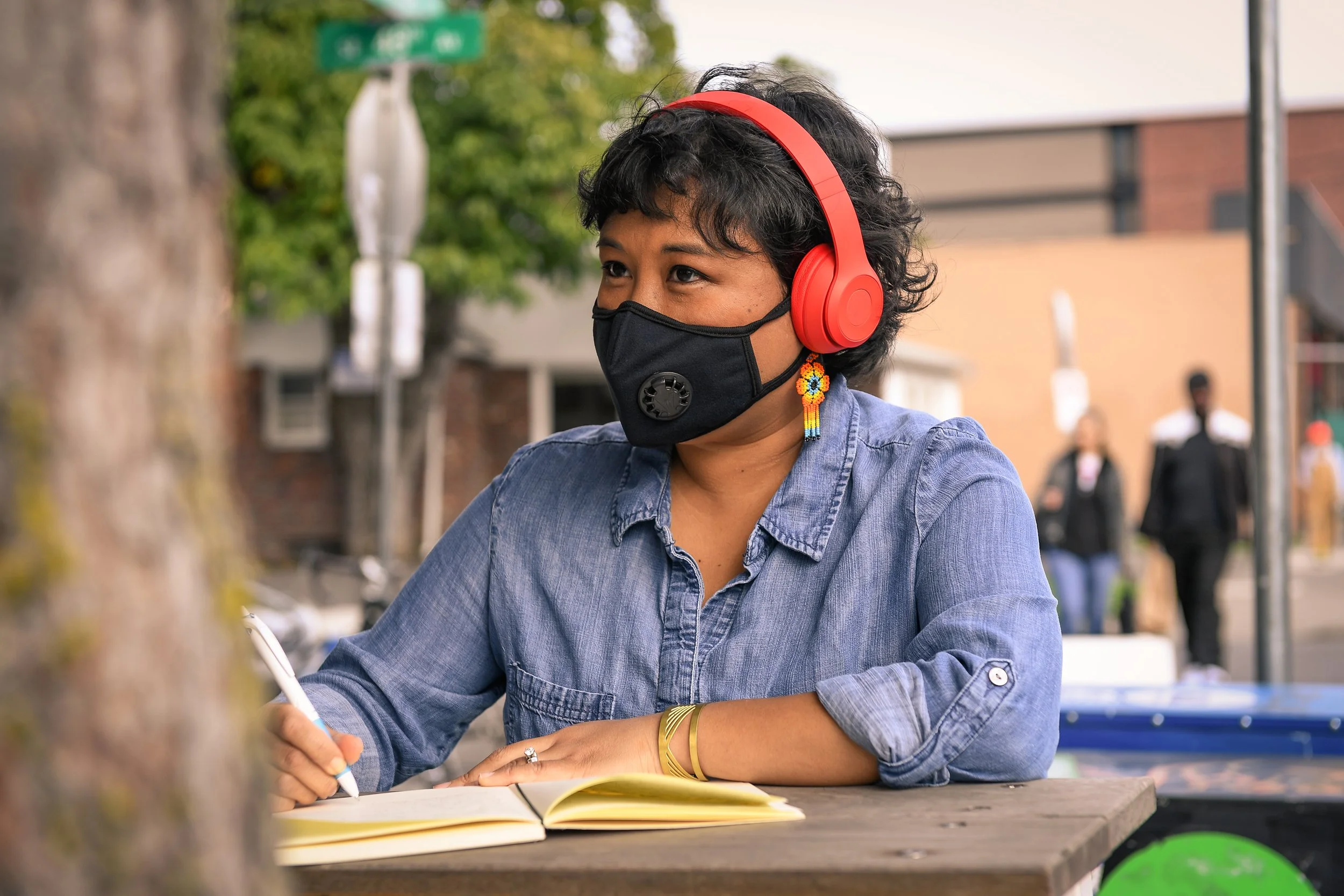
Photo Credit: Disabled And Here project
With more and more of our government and health systems dropping medical coverage and vaccinations, this new library felt necessary for our community. Disabled people of color are undertreated and underdiagnosed. Being disabled and chronically ill is a full-time job AND you need disposable income to fully take care of yourself. I felt the inequity of all that and wondered: what if we started an experimental library so we can have resources that people can rent out? Like a molecular COVID test, which has a higher level of accuracy (a test is at least $25; the reader is $49.99) than rapid antigens. There is only one molecular-level test widely available in the US; costs add up if you need to be testing regularly!
We also recently got carbon dioxide monitors to help monitor the airflow of a room. The ones we are stocking are the most expensive but also supposedly most accurate, at $200. These are costs that you cannot expect an individual disabled person to front themselves, and it’s not fair that folks are having to carry the costs alone. We recently rented a monitor out to someone who hosted a masked dance party!
CHRL also gives out free masks – people don't always realize that masks don’t fit all; like finding the right doctor, you might have to try them out. So we say, take 20 masks and figure out which kind you feel is best for you, so you don’t have to spend your own money buying different types of masks! Trying to sort and parse through these types of resources takes a lot of labor and money, and we hope to reduce some of these burdens through this new program.
Q: Tell me about your work with APANO (they are a long-time grantee of ours).
A: The CHRL pop-ups needed a place to be and APANO’s Arts & Media Project felt like a very natural collaboration. Their Open Studios is BIPOC-centered, which is very Affect-aligned. I would love to find more groups to do pop ups with and meet people where they are rather than expect people to find us. Where are people already gathering?
We are gearing up for an in-person event of our own in 2027. We're not sure exactly what that looks like, but definitely with COVID-safe practices. Probably a community event with a full CHRL setup. We hope to have art there, as well as resources for artists and crafts for people to do. The goal is a lovely indoor venue with some outdoor space, centered around accessibility.
Q: How are you responding to some of what is being discussed in regards to changes to Medicaid in Oregon, currently?
A: Affect is focused on disability arts and culture, so we’re more about working beyond the system and Medicaid. We're less an acute services organization and more grassroots. I often wonder, ‘Is there anything CHRL can provide that can help folks?’
The reason Affect is so arts and culture focused is because when our systems are failing us, it’s the hardest time to remember to cultivate hope and encourage yourself to see a potentially different future. We know that if we come together, we can remind each other that better things are possible; just because they are not a reality now doesn't mean they will never be. There is never enough direct services or support, but something I desperately need is encouragement and nourishment of the spark where we tend to ourselves, which feeds our will to live and eventually thrive. It’s such a hard time to do that. Art is life-saving because it gives your brain something else to focus on; there are different avenues, and it doesn’t always have to be like this. Possible Futures might be the least used series from our library, but its art is necessary.